2026 Trends: OEM Manufacturing of Reduced-Sugar and Vegetarian (Jay) Sauces as a Business Opportunity
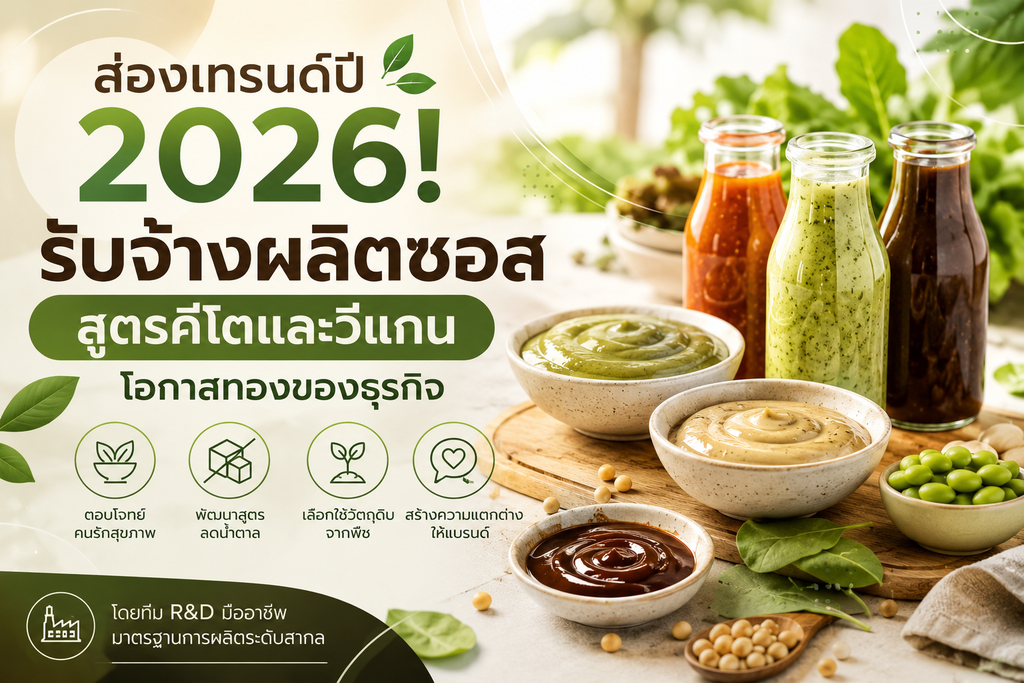
In 2026, consumers aren't looking only for food that's “tasty.” They're increasingly choosing products that fit their lifestyle and eating patterns, whether that means controlling carbohydrates, cutting down on sugar, eating plant-based, or following a vegetarian (jay) or vegan diet.
For business owners, this is an opportunity to create sauces that target a niche market and stand apart from the general sauces on the market.
But developing alternative sauce formulas isn't just about “removing sugar” or “removing animal ingredients,” because when you change one ingredient, the properties of the whole sauce system may change as well.
Having an R&D team and a factory sauce contract manufacturing that understand formula development helps turn a brand's ideas into products that can actually be produced at industrial scale.
Why Are Alternative Sauce Formulas an Opportunity for Brands in 2026?
The food market is becoming more segmented. Each consumer group has different restrictions and needs, for example:
- Consumers who want to control their sugar intake
- Consumers who want to control carbohydrates (Low Carb)
- Plant-based consumers
- People who eat vegetarian (jay) food
- Vegan consumers
- Consumers who read labels and pay attention to ingredients
Instead of competing only in the general sauce market, creating products for specific groups is another way for brands to build clear positioning.
Especially restaurants, alternative food brands, meal prep businesses, or online sellers who want their own sauce recipes
A reduced-sugar sauce isn't just about removing sugar from the recipe
Sugar in a sauce doesn't only provide sweetness; it also affects viscosity, color, flavor, texture, and the physical properties of the product.
So if you take a standard sauce recipe and simply remove the sugar, the result may not match the original recipe.
The sauce may become thinner, the flavor unbalanced, the color different, or the texture different from what you want.
Developing sauces for carb-conscious consumers therefore requires rethinking the formula as a whole, from the sweetener system and viscosity to product stability.
An R&D team can help select ingredients and design a formula based on the brand's requirements, while also considering labeling requirements and nutrition claim rules before the product goes on sale.
So how do vegetarian (jay) and vegan sauces differ from regular sauces?
Another interesting market is products without animal-derived ingredients. It sounds like a simple brief, but in reality animal-derived ingredients can be hidden in a sauce's ingredients more often than you might think.
For example, some sauces may contain
- Fish sauce
- Oyster sauce
- Milk and dairy products
- Eggs or mayonnaise containing eggs
- Certain ingredients or flavoring components derived from animal sources
When developing a vegetarian (jay) or vegan formula, the R&D team must review every ingredient in the formula and choose substitutes that still preserve the product's flavor, aroma, texture, and character.
Without Vegan Certification, can a vegan formula still be developed?
An important distinction for business owners is that “formula development” and “obtaining a certification mark” are two different things.
Purefoods has not yet received Vegan Certification so it should not be communicated that products made at the factory carry a Vegan Certified mark.
However, the R&D team can take on a brief to develop vegetarian (jay) formulas, or formulas designed to avoid animal-derived ingredients, based on the customer's requirements, and help consider ingredients suited to the product concept.
If your brand has specific requirements for standards or certifications to use on the product, let us know at the start of the project so the factory can review the requirements and feasibility before formula development begins.
Note: Developing a formula without animal-derived ingredients does not automatically mean the product receives Vegan Certification. Any statements or certification marks on the label should follow the relevant rules and standards.
How Does an R&D Team Turn an “Alternative Sauce Idea” into a Producible Product?
The advantage of working with OEM Manufacturing of Alternative Sauce Formulas is that a brand doesn't need a complete formula from day one.
You can start from a concept, for example:
“We want a vegetarian (jay) spicy mayonnaise sauce”
“We want a chicken glazing sauce for the low-carb market”
“We want to make a Korean-style sauce without animal-derived ingredients”
“We want to develop a salad dressing for plant-based consumers”
The R&D team then considers the brief from many angles, including ingredient selection, flavor, sweetness, saltiness, sourness, viscosity, color, aroma, and product stability.
Once a prototype formula is ready, it moves into testing, adjustment, and scale-up to check whether the formula keeps the desired properties when produced in large volumes.
5 Alternative Sauce Ideas That Can Be Developed into Products
The niche sauce market can branch out into many more product concepts, for example:
1. Korean-style sauce for sugar-conscious consumers
Adjust the sweetener system and develop the flavor so it keeps its Korean character
2. Plant-based salad dressing
Develop a creamy texture by choosing ingredients that suit the product concept
3. Vegetarian (jay) spicy mayonnaise sauce
For restaurants, cafés, and brands that want to add alternative menu options
4. Teriyaki sauce for the low-carb market
Design a new formula that takes into account sweetness, viscosity, and how well it coats food
5. Vegetarian (jay) mala sauce or shabu sauce
Expand into the plant-based market, with room to develop different characters of heat, numbing, saltiness, and spice aroma
The key is that you don't need to follow every market trend. Instead, choose a clear target group and create a formula that truly meets that group's needs.
Regarding label claims: Pure Foods can develop reduced-sweetness or reduced-sodium formulas, but there must first be one reference formula before another formula can be described as “reduced sweetness” or “reduced sodium” compared with that reference formula, and label statements must comply with Thai FDA rules. Read the production order conditions atOEM Manufacturing MOQ
Before Making a Reduced-Sugar or Vegetarian (Jay) Sauce, What Should You Brief the Factory On?
The clearer the brand's brief, the more focused the formula development.
Business owners should prepare basic information such as the target group, desired flavor, dishes the sauce will be used with, packaging format, expected selling price, and any ingredient restrictions.
Especially for alternative formula products, clearly state whether the brand wants only a formula concept or wants to use any claim or certification on the product label
because each term has different conditions and requirements, and may affect ingredient selection from the very first stage of product development.
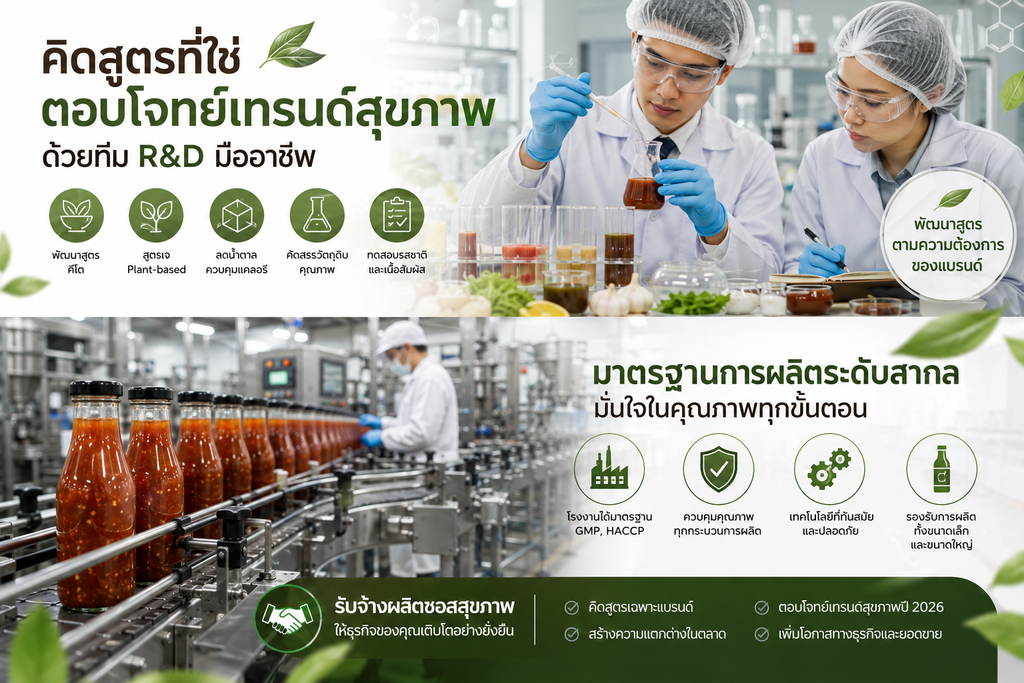
Create a new market with sauces designed for your target group
Competing in the sauce market doesn't always have to come down to making cheaper products. Another opportunity is to create Value-added Product with a clear concept that meets the needs of specific consumer groups.
Whether it's Low Carb, Plant-based, or vegetarian (jay), what matters is developing the formula systematically and communicating the product's properties accurately.
Reaching niche consumer markets doesn't have to be difficult if you have a partner OEM Manufacturing of Alternative Sauce Formulas with an R&D team that helps develop formulas based on the brand's requirements, from the first idea, formula testing, and flavor and texture adjustment through to preparing the formula for commercial production.
Because the opportunity in the alternative products market in 2026 isn't about following every trend, but about choosing the trends that fit your brand and turning them into products that are distinctive, producible, and with a market ready for them.
Read more:
• How Long Does OEM Production Take? Steps from Formula Development to First Lot Delivery
• Can You Hire a Manufacturer to Produce Your Own Recipe? How Many Grams of Sample to Send, Who Owns the Formula, and How Far an NDA Protects You
📞 Phone: 081-546-6606 (24Hrs)
LINE: Line : @purefoods
E-mail: Pure Foods
