
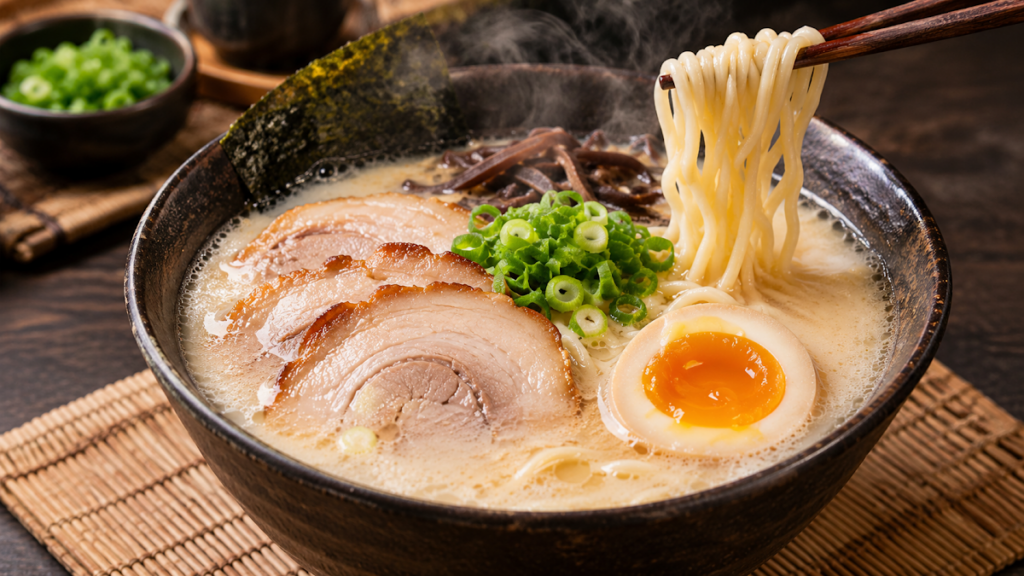
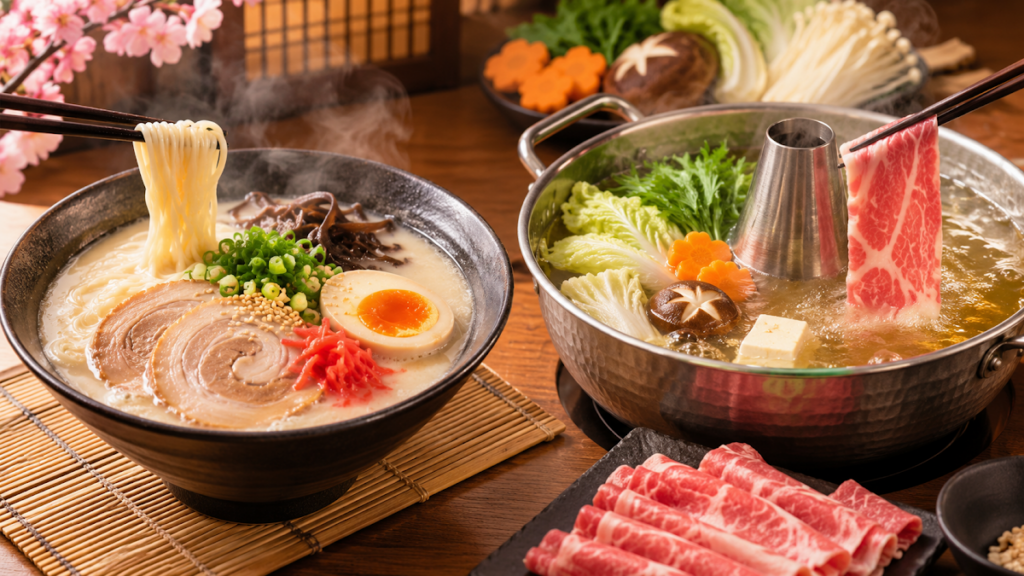
Tonkotsu broth is a Japanese-style pork bone broth simmered for a long time until milky white, rich and fatty, usually used for ramen. Clear shabu broth is light and clear, used to cook meat, vegetables and mushrooms at the table. Tonkotsu means pork bone in Japanese. Neither is better than the other; it depends on the dish and the flavor you like.
How is tonkotsu broth different from clear shabu broth?
| Topic | Tonkotsu Soup | Clear shabu broth |
|---|---|---|
| Features | Milky white, thick, rich | Clear, pale, light |
| Basic ingredients | Pork bones, water, aromatics | Water, kombu, dashi or stock |
| Technique | Boil the bones hard for a long time so the fat disperses | Extract flavor over low heat to keep it clear |
| Flavor | Pronounced pork bone aroma and umami | Light, letting the ingredients shine |
| Best for | Ramen, udon, rich hot pot | Shabu, clear hot pot |
Why is tonkotsu broth milky white?
When pork bones are boiled hard, the fat and substances from the bones and tissue break into tiny droplets that disperse in the water, so the broth turns milky white without any milk. This is unlike clear broth, which is cooked over low heat with the foam skimmed off.
The saltiness of tonkotsu ramen doesn't come from the bones alone. Ramen shops usually add a seasoning sauce (tare) such as salt or shoyu, plus aromatic oil, to each bowl.
What is clear shabu broth made from?
The traditional Japanese style uses water and kombu; some recipes use dashi or chicken or pork stock. Clear broth doesn't mean bland: it gets umami from kombu, mushrooms or bones, and you can add flavor with ponzu or sesame dipping sauce. See the recipe at Clear shabu broth recipe and see all types of shabu broth at How many types of shabu broth are there
Can you use tonkotsu broth for shabu?
Yes, if you like a rich hot pot, but the broth gets stronger as it boils, so taste regularly and add hot water as it gets saltier.
Pure Foods Tonkotsu Shabu Soup 1,000 g is a concentrated tonkotsu-flavored soup. The product page gives the mixing ratio 100 g of sauce per 1,000 ml of water Use it for shabu, ramen or udon. Allergen information: Contains egg, sesame, soy products and wheat See the product at Tonkotsu Shabu Soup 1,000 g and to use it for ramen, see Tonkotsu ramen at home
If you prefer clear broth, use Traditional shabu soup (clear) 170 ml or Soup seasoning sauce with kombu 800 g Both must be mixed with water every time. Not sure about the mixing ratio? Add LINE @purefoods and ask us.
Which broth suits which dish?
- Ramen and noodles: Tonkotsu coats the noodles well and goes with chashu pork, boiled egg and spring onion
- Fresh shabu: Clear broth doesn't mask the meat and vegetables; adjust the flavor with dipping sauce
- Rich hot pot: Use tonkotsu, but watch the saltiness when boiling for long
Summary
Tonkotsu and clear shabu broth differ in ingredients, simmering method, color and use. Tonkotsu is a milky, rich pork bone broth suited to ramen, while clear shabu broth is light and suited to cooking many ingredients. Choose by the dish you're making, and check the ingredients on the actual label.
Read more: What is shabu, and how is it different from suki?
Frequently asked questions
Does tonkotsu broth contain milk?
Traditional tonkotsu gets its milky color from simmering bones, no milk needed, but ready-made products vary by brand, so check the ingredients on the label.
Is tonkotsu the same as ordinary pork bone soup?
Not necessarily. Pork bone soup can be simmered clear or cloudy, while tonkotsu refers to the milky white pork bone broth of Japanese ramen.
Does clear shabu broth always need kombu?
No. Kombu is the common Japanese approach, but you can use stock or mushrooms instead.
How much water do you mix with Pure Foods Tonkotsu Shabu Soup?
The product page states 100 g of sauce per 1,000 ml of water.
Which broth is less salty?
You can't tell from the type of soup; it depends on seasoning and dilution. Check the nutrition information on the label.
📞 Phone: 081-546-6606 (24Hrs)
LINE: Line : @purefoods
E-mail: Pure Foods
