
Shabu broth that is too sweet can be fixed without throwing it out. Ladle some broth into a small cup and adjust it there first: add hot water or unseasoned stock a spoonful at a time, stir and taste. Once you like the taste, adjust the whole pot. If it gets sweeter during the meal as the level drops, first add back hot water to replace what evaporated. If the pot is too sweet right after mixing, it is usually better to replace part of the broth with an unseasoned stock that matches its aroma.
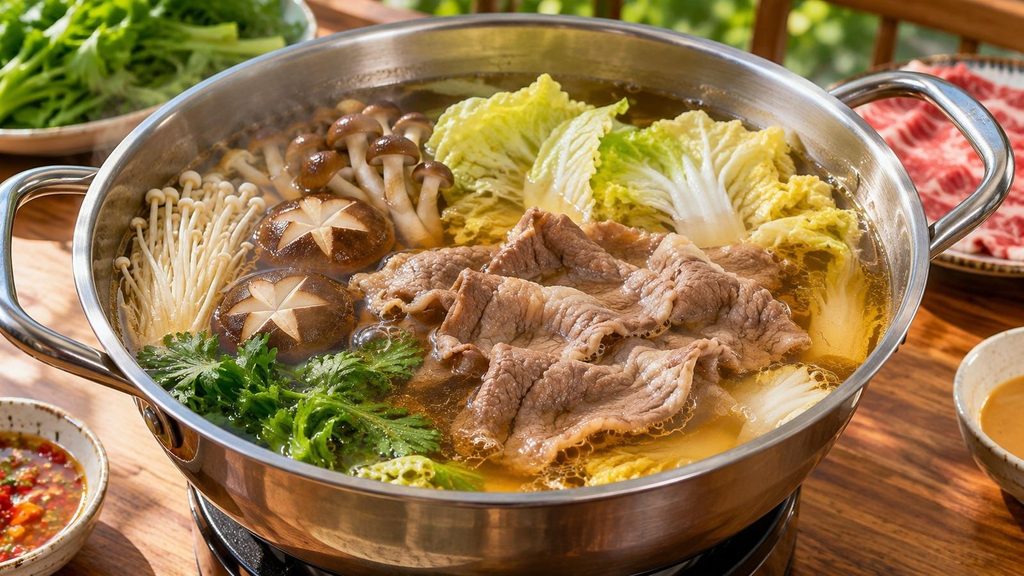
Taste the plain broth first: when did it become sweet?
The first sweet bite may come from marinated pork or the dipping sauce, not the whole pot. Ladle only the broth into a cup, let it cool enough to taste, then compare it with a bite of vegetable or tofu without sauce. If the plain broth is fine but the pork with sauce is too sweet, use less dipping sauce for that bite instead; others who like the broth can keep eating without changing the shared pot.
Sweet before adding meat and vegetables
Check how many parts of soup base to water you used, and whether other sweet seasonings were added. Many sukiyaki-style broths use soy sauce, mirin and sugar together. If you use a pre-seasoned soup base and then add seasonings from a recipe that starts with plain water, it can end up sweeter than intended. Always taste the base after mixing it according to the label before adding anything.
Sweeter after eating for a while
Look at the broth line on the side of the pot. If the level has dropped a lot and both sweetness and saltiness have increased, water has evaporated while the seasonings stayed in the pot. Start by adding hot water a little at a time. Do not top up with concentrated soup base to the lost level, as that adds more of an already strong taste.
If the level is about the same but the taste changed after adding corn, onion or several plates of marinated meat, take out the cooked vegetables first, then taste again before adding the next batch.
How do you test two cups before adjusting the whole pot?
Use two cups of similar size and ladle 4 tablespoons of broth into each. Keep the first cup as the original taste. Add 1 teaspoon of hot water to the second, stir and taste. If it is still sweet, add another teaspoon and note how many you used. Keeping the first cup lets you compare aroma and strength after several tastings, when you can no longer remember the original.
If the sweetness is right but the aroma is too faint, make a new cup using unseasoned stock instead of hot water in the same amount. Choose a stock milder than the broth in the pot, such as radish water or unseasoned kombu stock.
Scaling from the test cup to the real pot
Suppose you like 4 tablespoons of the original broth with 1 tablespoon of hot water: that is 1 part water to 4 parts broth.
| Scenario | Broth in pot | Adjustment (4 : 1 ratio) |
|---|---|---|
| Pot still has room | 800 ml | Add about 200 ml hot water, a little at a time, tasting as you go |
| Pot is full, want to keep 800 ml | 800 ml | Remove 160 ml of broth, then add back 160 ml of plain water |
The figures in the table are examples from the test cup. If your preferred cup uses another ratio, the pot amounts change accordingly. Add only part first, since vegetables and meat in the pot also take up space.
Should you add hot water or unseasoned stock, for clear and black broth?
Hot water suits a pot where sweetness, saltiness and seasoning aroma are all too strong. Unseasoned stock suits a pot whose aroma you still like but want less sweet. Always taste what you plan to add on its own first.

Clear broth that is sweet from vegetables
A pot with several pieces of corn and onion at once may taste sweeter than some people like. Take out the softened vegetables, add a little hot water, and taste with tofu. Next time, add sweet vegetables in small batches to find the point you like. See how to make a basic clear broth in Clear shabu broth recipe
Black broth that is both sweet and salty
Black broth is already dark, so it is hard to judge its strength by color. Taste it both plain and with a thin slice of meat. If the sweet-salty taste covers the meat, start with hot water. If adding water fixes the sweetness but most of the aroma is gone, use dashi or unseasoned kombu stock next time. A lighter color after adjusting does not need to be fixed by adding soy sauce back. If the problem is more salty than sweet, see How to fix black shabu soup that is too salty
If the broth gets bland after adding water, what should you add?
Pause and identify what is missing. If it lacks aroma, try an unseasoned stock with mushroom or bonito aroma in a test cup. If it really lacks saltiness, add a drop of shoyu to a tasting cup and compare. A broth that looks lighter may already be right when eaten with meat and dipping sauce. To add flavor to a pot that is too weak, read How to fix black shabu soup that is too weak
Salt, shoyu or lime change how the tongue perceives the balance, but the sugar already in the pot stays there. If you want a fresh sour note, squeeze lime into each person's dipping cup first; it is easier to undo than squeezing a whole lime into the shared pot.
Three situations, three different fixes
First pot of the meal, sweet before anything is added
Read the mixing instructions on the label again. For example, if the label says 1 part soup base to 4 parts water and you use 100 ml of base, add 400 ml of water for 500 ml in total. Filling water only up to the 400 ml mark gives less water than intended and a stronger taste. This example is only for practicing ratios; follow the label of the product you use.
Divided pot: the black broth side gets strong faster than the clear side
The two sides can end at different levels even if started together. Taste each side separately and add only to the side that needs it. Use separate ladles and do not pour from the other side to fix it, or it becomes hard to tell why the sweetness dropped.
Wanting noodles at the end but the broth tastes sweet
Ladle broth into a small pot just for the noodles, mix in unseasoned stock and taste before adding noodles, then taste noodles and broth together once cooked. Noodles carry broth with every bite, so a taste that is right for dipping meat may be too strong for a bowl.
How can you prepare the next pot to taste right from the start?
Prepare two containers: one with the starting broth mixed according to the label, and one with hot water or unseasoned stock for topping up during the meal. If the pot level dropped because people served themselves broth, the remaining taste may still be right, so add starting broth. If it dropped because it boiled a long time, add hot water first.
Note just three things next to your recipe: the amount of soup base and water at the start, which ingredients went in first, and the point when it tasted right, such as “liked it after the mushrooms, before the second round of corn”. Next time you will know the one thing to change. If you use Purefoods shabu soup and are unsure whether the label refers to water added or total volume, add LINE @purefoods and ask with the product name.
Summary
For shabu broth that is too sweet, start by tasting the plain broth and checking the level. If it got sweeter and saltier after long boiling, add hot water to replace what evaporated. If it was sweet from the start, compare a cup with hot water against a cup with unseasoned stock, then note the ratio you like for next time. Ask about shabu soup products and mixing via LINE @purefoods
Frequently Asked Questions
Can plain water fix sweet shabu broth?
Yes, especially when the pot has boiled for a long time and other tastes are stronger too. Use hot water so the pot heats up again quickly; add gradually, stir and taste. If the sweetness is right but the aroma is very faint, next time use part hot water and part unseasoned stock.
Does ladling out broth alone reduce sweetness?
No. There will be less broth, but each spoonful is just as strong. What makes it milder is adding water or unseasoned stock back. If the pot still has room, simply add without removing any.
Can potatoes or glass noodles absorb the sweetness?
Ingredients that soak up broth absorb all of its taste; they do not remove only the sweetness. If you want glass noodles, adjust the broth to your liking first and then add them.
What if family members like different levels of sweetness?
Adjust the shared pot for whoever prefers it milder, then put some sweet seasoning in a small cup for those who want more. With a divided pot, use the same starting broth and adjust the sweetness on one side only.
📞 Phone: 081-546-6606 (24Hrs)
LINE: Line : @purefoods
E-mail: Pure Foods
