
Today, besides recipes made from various ingredients, there is also Pure Foods' ready-made pork marinade, making Korean BBQ convenient, fun, and delicious for everyone. It saves the hassle and the time spent sourcing each ingredient for a pork marinade and, importantly, keeps the flavor of the marinated pork consistent. When we marinate at home, each batch is likely to taste at least slightly different, but a ready-made marinade helps solve this problem, because Pure Foods' ready-made sauces are produced to the same standard in every production run, so the flavor stays the same from batch to batch. But first, this article explains how to choose a Korean pork marinade for Korean dishes. Korean pork marinades come in many forms, each suited to different dishes, so before cooking we need to choose ingredients and seasonings that fit the purpose to get the dish and flavor we want.

Choosing a Korean pork marinade to suit the dish: Korean food comes in many types, and marinade is usually used before cooking to make the meat tender and tastier. But not every marinade suits every dish; different marinades suit different flavors. If used incorrectly, the marinated meat may not taste as intended, wasting both your mood and your mealtime. Because of differences in flavor and concentration, highly concentrated marinades suit short marinating before grilling or stir-frying right away. If left too long, the meat may taste stronger than it should. Some marinades may need to marinate overnight with other seasonings added; for these, you must marinate for the full time, or the meat will lack flavor because the sauce hasn't soaked in enough. Purefoods offers all of these. Here are a few more notes:
– Pork marinade for grilling These products are often labeled “Galbi” and mostly focus on Korean-style flavor, marinated with gochujang (Korean chili paste), and can be further seasoned to taste.
– Korean pork marinade for stir-frying: usually used with sliced pork. You can use either gochujang or a ready-made marinade labeled “Bulgogi”, and marinating takes only 30 minutes.
To let the marinade soak evenly into the pork, you may need to marinate it overnight. So if you want to save marinating time to have the meat ready for cooking, we recommend choosing a concentrated Korean pork marinade sauce, which gives a rich, deep flavor and quickly makes the meat more tender, and gives a juicier sauce when grilled. But if it's not convenient to prepare many ingredients to marinate the pork, you can use a ready-made Korean pork marinade sauce instead, because it's already seasoned. Just marinate and cook to get delicious, well-balanced, tender pork just the way you want. When choosing a ready-made Korean pork marinade sauce, you should also check the label for allergen information, because many people trying to cook Korean food at home may not know exactly what ingredients the marinade contains. Choosing a Korean pork marinade sauce with clearly labeled allergen information is safer for people with certain food allergies. Most marinades contain gluten from wheat, soy and sesame, and people who are allergic to these ingredients should not eat them. So before buying, consider the marinade's ingredients and check the allergen label carefully. Besides ready-made pork marinade sauce, Purefoods also offers Korean grilled pork dipping sauce for added convenience and time savings.
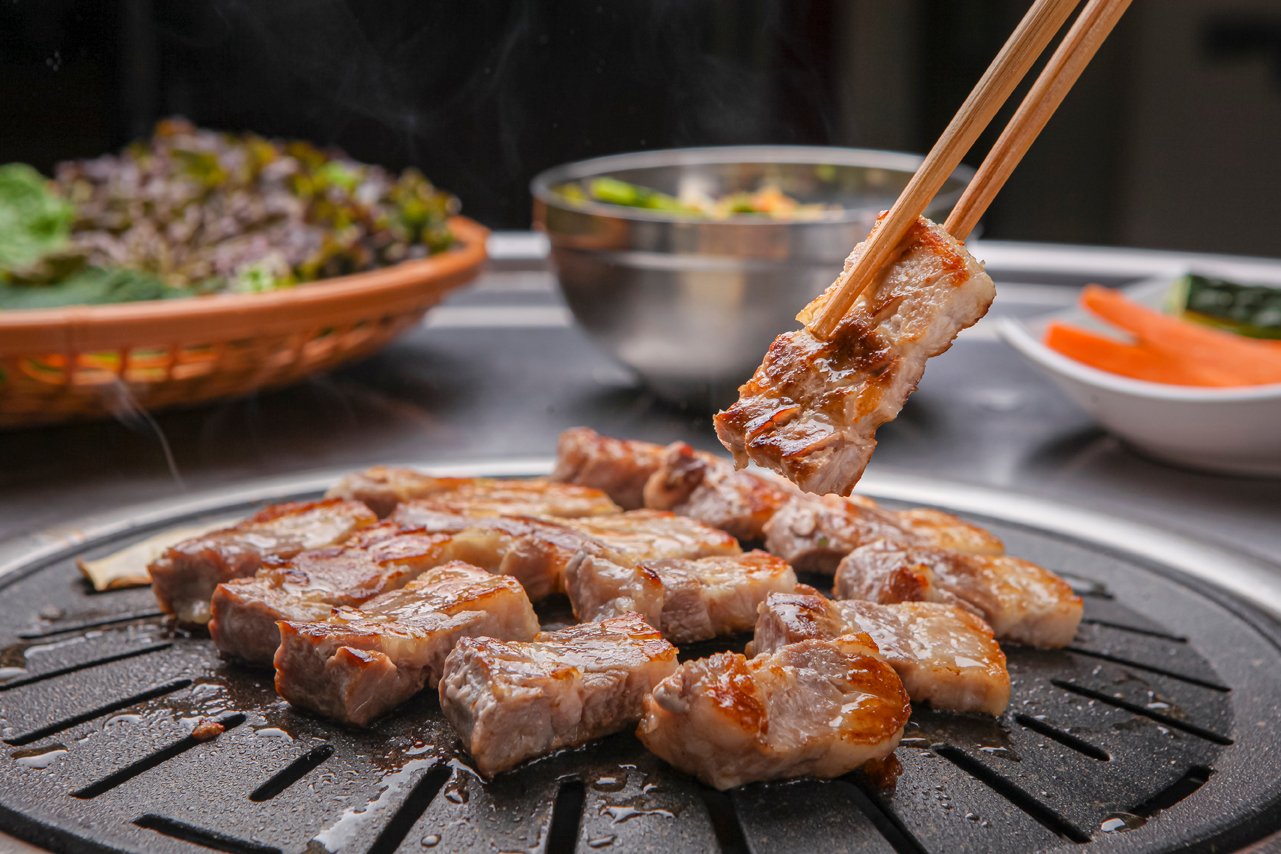
Tips for Tender, Delicious Korean Marinated Pork
When choosing pork, pick cuts with some marbling so the meat does not turn too tough when cooked. Do not cut the pork along the grain, as this makes it tough; cut across the grain instead. For large or thick pieces, poke holes in the meat so the sauce soaks in better, or pound the meat flat. After seasoning and marinating, if you want to marinate overnight, keep the meat in the refrigerator to prevent spoilage.
Although ready-made Korean pork marinades are made to help tenderize pork to some degree, for those who feel the pork still isn't tender enough, you can make it softer by adding easy-to-find ingredients such as soda, wine, beer, soft drinks, sesame oil, corn starch, baking soda or fresh milk.
Koreans don't eat grilled pork by simply grilling it, dipping it in sauce and eating it on its own. There are side dishes too, and the essentials are lettuce, kimchi, sauce and salt. For a full spread, there are also perilla leaves, pickled radish, bean sprouts, onions, garlic and green onions. Wrap the grilled pork in the greens, add more sides and eat. If it feels dry, there's kimchi soup and miso soup on the side to sip.
Korean Side Dishes: "Banchan"
When it comes to popular Korean dishes, many people immediately think of samgyeopsal (Samgyeopsal : 삼겹살), better known as “Korean grilled pork,” with its thick, tender pork belly and charcoal-grilled aroma. Besides the main dishes, another important part of a Korean meal is the side dishes, known as “banchan.” This vegetable-rich side dish culture began during the Goryeo Dynasty (around the 10th-14th centuries), influenced by vegetarian eating in Mahayana Buddhism. Korean side dishes are very diverse, and the custom of eating them also reflected social status in old Korea: royal meals could include as many as 12 side dishes, meals of the nobility had 9, well-off families had 5-7, and commoners had only 3. Side dishes help round out the nutrition of every meal, since they include vegetables, starches, and meat. Today, the number of side dishes varies by household and by restaurant; higher-end or pricier restaurants often serve a full spread, and each restaurant may have its own style and specialty side dishes. Some side dishes may also be served specifically to pair with certain foods. Korean side dishes are divided by preparation method into 7 types, as follows:
1. Chili-pickled (kimchi)
The spicy pickled side dish for Korean barbecue, or kimchi, is a must at every meal. It came from Koreans' wish to preserve fresh vegetables, so they fermented vegetables such as napa cabbage, radish, green onions or cucumbers with salt, Korean chili powder and seasonings, giving them a sour, spicy and salty taste. It can be eaten as a Korean side dish or used in many main dishes, such as kimchi soup or kimchi fried rice.
2. Seasoned (Namul)
The seasoned type of side dish for Korean barbecue is called namul. It isn't spicy. Vegetables such as bean sprouts, seaweed, spinach, eggplant or amaranth are blanched, boiled or steamed first, then tossed or stir-fried with seasonings such as sesame oil, salt, vinegar or soy sauce. Some dishes may also include minced garlic, chopped green onion or Korean chili powder for a more rounded flavor.
3. Spicy salad (Muchim)
The spicy salad type of Korean side dish is called muchim. It's similar to the seasoned type: vegetables such as eggplant, seaweed or spinach are cooked first and then seasoned, but with more heat from gochujang, such as sigeumchi muchim (spinach salad) or gaji muchim (eggplant salad).
4. Stir-fried with sauce (Bokkeum)
The stir-fried type of Korean side dish is called bokkeum, where ingredients are stir-fried with sauce, such as beoseot bokkeum (seasoned stir-fried mushrooms), stir-fried with sesame oil and seasonings, or jeyuk bokkeum (Korean spicy stir-fried pork), pork belly stir-fried with gochujang sauce, onions and vegetables.
5. Braised (Jorim)
The braised type of side dish for Korean barbecue, or jorim, involves simmering ingredients in a seasoned broth, such as dubu jorim (spicy braised tofu), where cubed tofu is fried until crispy, then simmered in gochujang sauce and seasonings.
6. Steamed or boiled (Jjim)
The steamed or boiled type of Korean side dish, or jjim, involves braising, boiling or steaming ingredients, such as gyeran jjim, the Korean steamed egg in a hot pot that everyone probably knows. The steamed egg is smooth and soft and is usually served hot in a hot pot so it stays soft and fragrant while you eat.
7. Fried (Jeon)
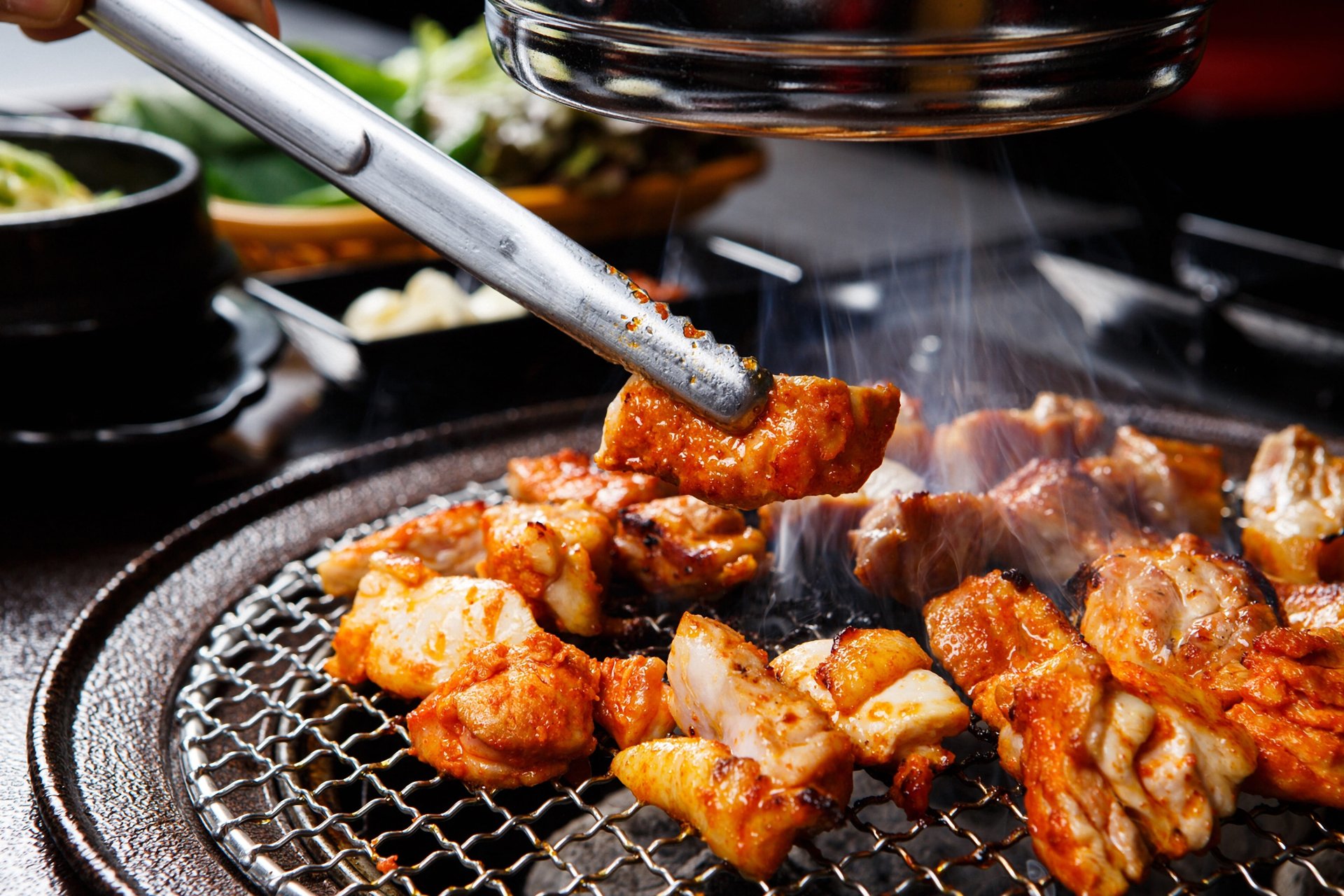
The last type of Korean side dish is fried, or jeon, which many people have probably seen often in Korean restaurants. The main ingredients are flour and egg, mixed with seasonings and other ingredients such as green onion, kimchi or meat, and fried into a round pancake shape. Next, let's get to know popular side dishes eaten with Korean grilled pork that are often featured online, which you may have heard of or tried. The ingredients and ways of eating these 9 side dishes are as follows:
- Napa Cabbage Kimchi (Baechu Kimchi)
Baechu kimchi, or napa cabbage kimchi, is a side dish for Korean barbecue that many people know. It is napa cabbage fermented with Korean chili powder and seasonings, so it tastes sour, spicy and salty at the same time. It's popular with grilled pork because it cuts the richness well.
Ingredients: Napa cabbage kimchi is made mainly with napa cabbage, washed in salt water and marinated with Korean chili powder, sugar, fish sauce, salt, chopped green onion, minced ginger, garlic and rice flour.
How to eat: Napa cabbage kimchi can be eaten with all kinds of food. It's mostly eaten with Korean grilled pork and savory dishes, or used in cooking to make a dish tastier. - Green Onion Kimchi (Pa Kimchi)
Pa kimchi, or green onion kimchi, is a side dish for Korean barbecue similar to baechu kimchi. Koreans like to eat green onion kimchi in spring, because green onions grow well in that season. Green onions also have their own spicy heat, so even though they're fermented with the same method and ingredients as other kimchi, green onion kimchi is much spicier than other kinds.
Ingredients: Green onion kimchi is made mainly with whole green onions, nothing cut off. They're washed in salt water, tied together and marinated with Korean chili powder, sugar, fish sauce, salt, minced ginger, garlic and rice flour.
How to eat: Green onion kimchi is a side dish for Korean barbecue that goes with all kinds of food, mostly grilled pork, grilled beef, ramyeon or jajangmyeon.
3. Radish Kimchi (Kkakdugi)
Kkakdugi, or radish kimchi, is another popular kimchi side dish for Korean barbecue. It's made with the same method and marinade ingredients as other kimchi, and is sometimes served cut into bite-sized cubes.
Ingredients: Kkakdugi is made mainly with daikon radish, peeled, washed in salt water and possibly cut into bite-sized cubes before marinating with Korean chili powder, sugar, fish sauce, salt, minced ginger, garlic and rice flour.
How to eat: Radish kimchi is eaten much like other kimchi, mostly with soups such as seolleongtang (beef bone soup) or galbitang (beef short rib soup), but it also goes with other dishes such as grilled pork, grilled beef or Korean fried chicken.
4. Seasoned Bean Sprouts (Kongnamul)
Kongnamul, or seasoned bean sprouts, is a seasoned side dish for Korean barbecue that Koreans love, because it cuts richness well, tastes good and is easy to eat. It can also be eaten as a snack and made ahead to eat over several days, but shouldn't be kept longer than 4–5 days, as the taste changes.
Ingredients: Kongnamul is made mainly with bean sprouts, washed and boiled until cooked, then stir-fried with sesame oil and minced garlic, seasoned with soy sauce, sugar, salt and pepper, and garnished with green onion.
How to eat: Seasoned bean sprouts go with all savory dishes, usually dishes with bold flavors or lots of fat, because they cut the richness well.
5. Seasoned Seaweed (Miyeok Namul)
Miyeok namul, or seasoned seaweed, is another seasoned side dish often found in Korean barbecue restaurants. It combines the chewy, soft texture of seaweed with a well-balanced sweet, rich and salty taste, so it cuts richness well.
Ingredients: Seasoned seaweed is made mainly with dried seaweed soaked in water until soft, then stir-fried with sesame oil and minced garlic, seasoned with Korean chili powder, vinegar, sugar and salt, and sprinkled with sesame seeds.
How to eat: Seasoned seaweed is eaten like seasoned bean sprouts, with all savory dishes, mostly grilled pork, grilled beef or various soups, because it has a well-balanced taste and cuts richness well.
6. Korean Stir-Fried Glass Noodles (Japchae)
Japchae, or Korean stir-fried glass noodles, is a Korean side dish that many people may have seen in Korean dramas or at Korean restaurants. It uses Korean glass noodles, which are especially chewy, stir-fried with vegetables and meat and seasoned with various condiments, so it covers all 5 food groups and has a well-rounded, delicious flavor that is not to be missed.
Ingredients : Japchae is made mainly from glass noodles made of sweet potato starch, stir-fried with sesame oil, minced garlic, and vegetables such as carrots, onions, green onions, and mushrooms, then seasoned with soy sauce, sugar, salt, and ground black pepper. For extra nutritional value, you can also add meat.
How to eat : Japchae can be eaten as a Korean side dish or as a main dish, with its well-rounded flavor, sesame oil aroma, chewy noodles, and a good balance of nutrients.
7. Seasoned Stir-Fried Mushrooms (Beoseot Bokkeum)
Beoseot bokkeum, or seasoned stir-fried mushrooms, is a stir-fried side dish for Korean barbecue made from mushrooms. You may use several kinds of mushrooms or vegetables left in the fridge, stir-fried with seasonings until well-balanced and delicious, making it a great side dish.
Ingredients: Beoseot bokkeum is made mainly with mushrooms. Several kinds are cut into bite-sized pieces or strips and washed in salt water, then stir-fried with sesame oil and minced garlic, seasoned with oyster sauce and soy sauce, and topped with chopped green onion.
How to eat: Beoseot bokkeum is usually eaten with fried food or hot steamed rice, because it's salty, slightly rich and fragrant with sesame oil, giving a well-balanced taste with fried food or rice.
8. Korean Pancake (Pajeon)
Pajeon, or Korean pancake, is a fried side dish for Korean barbecue. Pajeon looks like a pancake because it's round, but tastes similar to Thai fried oyster batter. Some Korean restaurants fry pajeon into a large round and then cut it into bite-sized triangles or squares, like cutting a pizza, which is why it's also called Korean-style pizza.
Ingredients: Pajeon is made mainly with flour: crispy batter mix, tapioca starch and rice flour mixed with water, eggs and chopped green onion, seasoned with Korean chili powder, sesame oil, soy sauce, sugar and vinegar, then fried into a golden round.
How to eat: Pajeon is usually eaten with dipping sauce as a snack or as a bar snack with drinks, and also goes with soups, stir-fries, fried dishes and grilled dishes.
9. Spicy Braised Tofu (Dubu Jorim)
Dubu jorim, or spicy braised tofu, is a braised side dish for Korean barbecue often found in Korean restaurants and Korean-style barbecue restaurants, because it cuts richness very well. It's simmered until the sauce soaks into the tofu, giving it a hot and spicy taste similar to Korean tofu stew (dubu jjigae), but drier and much spicier.
Ingredients: Dubu jorim is made mainly with tofu. White tofu is cut into cubes or slices and fried until golden and crispy, then the oil is poured off and water is added to about ⅓ of the tofu's height, along with minced garlic, seasoned with gochujang, Korean chili powder, soy sauce and sugar, and simmered until the liquid evaporates, then topped with chopped green onion.
How to eat: Dubu jorim goes with all savory dishes, mostly grilled pork, grilled beef or other grilled dishes, because its bold, spicy and salty flavor is great for cutting richness.
Today people prefer doing things quickly and conveniently, including cooking, because they don't have much time. But family relationships still matter, and Korean barbecue at home helps create a gathering atmosphere. So we suggest a menu that makes Korean-style barbecue easy to make at home using Purefoods Korean grilling sauce: just pour on the sauce and grill.
Ingredients
1. Pork belly or sliced beef
2. Grilling vegetables such as lettuce, garlic, onion, pumpkin, bell pepper, king oyster mushrooms and Korean chili
3. Seaweed sheets
4. Kimchi
5. Purefoods pour-and-grill sauce
Method
1. Marinate the pork with the pour-and-grill sauce for 5–10 minutes, or pour the sauce over the meat and grill right away. Because the pour-and-grill sauce is highly concentrated, it soaks into the meat well, so there's no need to spend time marinating. It's great for modern home cooks: convenient and easy.
2. Put the pork with the pour-and-grill sauce straight onto an electric grill, then add garlic, pumpkin, onion and king oyster mushrooms to grill. When the pork is cooked, plate it and serve with lettuce.
It tastes even better with grill dipping sauce, and to eat Korean barbecue properly, it should be served with side dishes, the most popular being kimchi. So we've put together an easy way to make kimchi, with the ingredients and method as follows:
Ingredients
1. Chili
2. Garlic
3. Ginger
4. Sugar
5. Korean chili powder
6. Fish sauce
7. Purefoods gochujang sauce
8. Napa cabbage
9. Vinegar
10. Salt
11. Carrot
Method Blend the chili, garlic and ginger together, then add 5 spoons of Purefoods gochujang sauce, 3 spoons of sugar, 3 spoons of Korean chili powder and 1 spoon of fish sauce and stir well. Soak the napa cabbage and carrot in water with 1 cup of vinegar and 2 spoons of salt for 2 hours. When the vegetables are ready, spread them with the prepared sauce and refrigerate for 15 hours for delicious kimchi.
Great Dipping Sauces for Korean Barbecue
Everyone's taste is different, so one person's favorite dipping sauce may not be the same as another's. Here are some tips for choosing a dipping sauce that suits you:
1. Spiciness level: this is the first thing to look at, because it makes it easier to decide whether a dipping sauce suits you.
2. Choose based on the style of barbecue you'll eat: today there are many dipping sauces, and each suits only certain types of barbecue. So choosing by type of barbecue is another thing to consider, because picking one that matches makes your barbecue tastier.
This article focuses on Korean BBQ, which is usually eaten with ssamjang. Ssamjang is made by mixing gochujang, Korean soybean paste, white sesame seeds, sesame oil, minced garlic, onion, mirin, honey/rice syrup, and black pepper. The name ssamjang comes from a word meaning wrap; simply put, it is a dipping sauce for Korean food that is wrapped before eating, such as Korean BBQ and grilled meat. Today there are also ready-made Korean dipping sauces, and Pure Foods Korean Pork Dipping Sauce is a great match. This dipping sauce is slightly sweet with a sesame aroma, and we think you will enjoy it.
Purefoods Ready-Made Korean Grilling Sauces
In today's fast-paced life, everything needs to get done quickly, and cooking is no exception. People generally rely on fast food, instant food, and ready-made meals. But there are occasions when we cook ourselves, such as major holidays and family gatherings, when people usually prefer food that lets everyone sit together and talk. One favorite is Korean BBQ, a popular meal with good nutritional variety, since besides the meat it comes with various side dishes. Much of the appeal of Korean grilled meat comes from well-marinated meat. However, getting tender, melt-in-your-mouth meat requires the right marinade recipe and the right marinating time. Because busy schedules limit our time, there are ready-made sauces for marinating meat with Korean-style flavor, with no need to search for a recipe and only a short marinating time, served with a ready-made Korean-style dipping sauce. Here we introduce the Pure Foods brand, which offers both Korean-style meat marinades and Korean-style dipping sauces. Besides home cooking, they also suit Korean BBQ restaurants, since the marinade meets the same standard every time it is used, giving the same flavor each time, along with a dipping sauce whose taste stays consistent every time customers visit.
First, let's get to know Pure Foods a little. Pure Foods is a company specializing in producing seasonings and condiments, including salad dressings, savory sauces, sweet sauces, mayonnaise, bakery fillings, syrups, and more. Besides manufacturing, Pure Foods also has a strong product research and development team, helping ensure that each Pure Foods product meets the production standard with a consistent flavor in every production run. Pure Foods also offers ready-made meat marinades for grilling, which save time sourcing ingredients and marinating, along with flavorful ready-made dipping sauces, in a variety of flavors to choose from.
Purefoods Korean-style meat marinades come in several recipes:
1. Purefoods Meat Marinade, Korean Grill Recipe
A flavorful meat marinade that helps you enjoy Korean-style flavor. Pure Foods Korean BBQ Meat Marinade is a rich, well-rounded Korean-style sauce that easily gives your marinated meat a savory, delicious Korean-style taste. Its flavor appeals to a wide range of consumers, especially fans of Korean-style food. Made through a standardized, hygienic production process, it adds flavor to meat, saves preparation time, and makes cooking more convenient.
Ingredients are as follows:
1. Sugar 35%
2. Soy sauce 10%
3. Chili 10%
4. Fermented soybean paste 10%
5. Iodized salt 7%
6. White sesame 1%
7. Spices 1%
How to use : For marinating to add tenderness and Korean barbecue sauce flavor to various meats
Allergen information : Contains soy products and sesame
2. Pure Foods Tenderizing Marinade, Korean BBQ Recipe
Pure Foods Tenderizing Marinade, Korean BBQ Recipe is produced with high-quality imported ingredients in a quality-controlled factory and is halal certified. This tenderizing marinade is used to marinate various meats so they become tender, with a Korean-style barbecue flavor and the aroma of a special sauce recipe that soaks into the meat. It is easy and quick to use, which suits busy home cooks: marinating takes just 20 minutes, with no need to marinate overnight. Unopened, the tenderizing marinade can be stored at room temperature for up to 6 months.
How to use : Squeeze Purefoods Korean Grill Tenderizing Marinade onto the meat, mix well and leave for 20 minutes, and the meat is ready to cook.
3. Pure Foods Tenderizing Marinade, Korean Chili Recipe
Pure Foods Tenderizing Marinade, Korean Chili Recipe uses gochujang Korean chili paste imported from Korea. Meat marinated with the Korean Chili Recipe tenderizing marinade has a rich, delicious Korean-style flavor. Marinate the meat for just 20 minutes for your grilled dishes and enjoy a sweet, well-rounded taste. Unopened, Pure Foods Tenderizing Marinade, Korean Chili Recipe can be stored at room temperature for up to 6 months.
How to use : Marinate the pork with the Korean Chili marinade, mix the pork and marinade well, then wrap the marinated pork and leave for 20 minutes. The marinated pork is then ready to grill in a pan. When cooked, plate and eat right away.
4. Purefoods Korean-Style Pour-and-Grill Sauce (Pour Before Grilling)
The Korean-style pour-and-grill sauce (pour before grilling) offers a new experience for fans of Korean barbecue who like cooking that is convenient, easy and fast. With Purefoods Korean-style pour-and-grill sauce, there's no need to waste time marinating: just pour on the sauce and grill. It makes difficult dishes easy instantly, with fragrant, delicious Korean-style flavor. It's very easy to use, in a spouted bag suitable for Korean barbecue restaurants or cooking at home for the whole family. Shelf life is 6 months; after opening, keep refrigerated.
How to use : Start by squeezing Purefoods Korean-style pour-and-grill sauce onto the meat you want, then grill the sauced meat. That's all it takes to enjoy Korean-style grilled meat simply, with no hassle or time spent marinating.
When eating Korean-style grilled meat, besides marinating the meat so it is tender and tasty, the other essential is the dipping sauce. Making a dipping sauce yourself takes a recipe and quite a few ingredients, so here we introduce Pure Foods' ready-to-use dipping sauce for Korean-style grilled meat, which is tasty, well-rounded, and balanced, with no need to gather ingredients and spend time preparing it: Pure Foods Korean Pork Dipping Sauce, packed in a glass bottle. This tasty dipping sauce helps complete your Korean-style BBQ meal. With its well-balanced flavor, this Korean grilled meat dipping sauce pairs well with grilled dishes and adds flavor to your BBQ ingredients. It is made through a standardized, hygienic production process. Unopened, Korean Pork Dipping Sauce can be stored at room temperature for up to 12 months.
To repeat: Pure Foods' grilling marinade needs only 20 minutes of marinating, with no extra seasoning needed, and the meat is ready to cook right away. It goes very well with both BBQ and steak. Getting a delicious flavor in just 20 minutes saves a lot of time, which suits people who are short on time. Pure Foods also has a new pour-and-grill sauce that is even easier to use: there is no need to marinate; simply squeeze the sauce onto the meat and put it straight on the grill. Very convenient. This meat marinade brand stands behind its quality, in both flavor and standardized production, and it is popular. Importantly, it is easy to find at convenience stores such as 7-Eleven, supermarkets, and department stores, or online on Lazada and Shopee. The sauce comes in convenient packaging in several sizes to suit the amount of meat you marinate each time, at an affordable price. For large quantities, such as BBQ restaurant owners who want the same flavor every time they marinate, you can also order directly from Pure Foods online.
📞 Phone: 081-546-6606 (24Hrs)
LINE: Line : @purefoods
E-mail: Pure Foods
