
Japanese and Taiwanese sesame dipping sauces differ in the seasonings mixed with the sesame. Japanese sesame dipping sauce uses ground roasted white sesame mixed with shoyu, mirin, and vinegar, giving it a smooth, creamy texture and a sweet-tangy, non-spicy flavor. Taiwanese sesame dipping sauce is often mixed with fermented soybean paste or sha cha sauce, ground peanuts, and chili oil, giving it a thick texture and a salty, spicy, nutty flavor. For shabu with clear broth, choose the Japanese style; for mala hot pot or bold-flavored soups, choose the Taiwanese style.
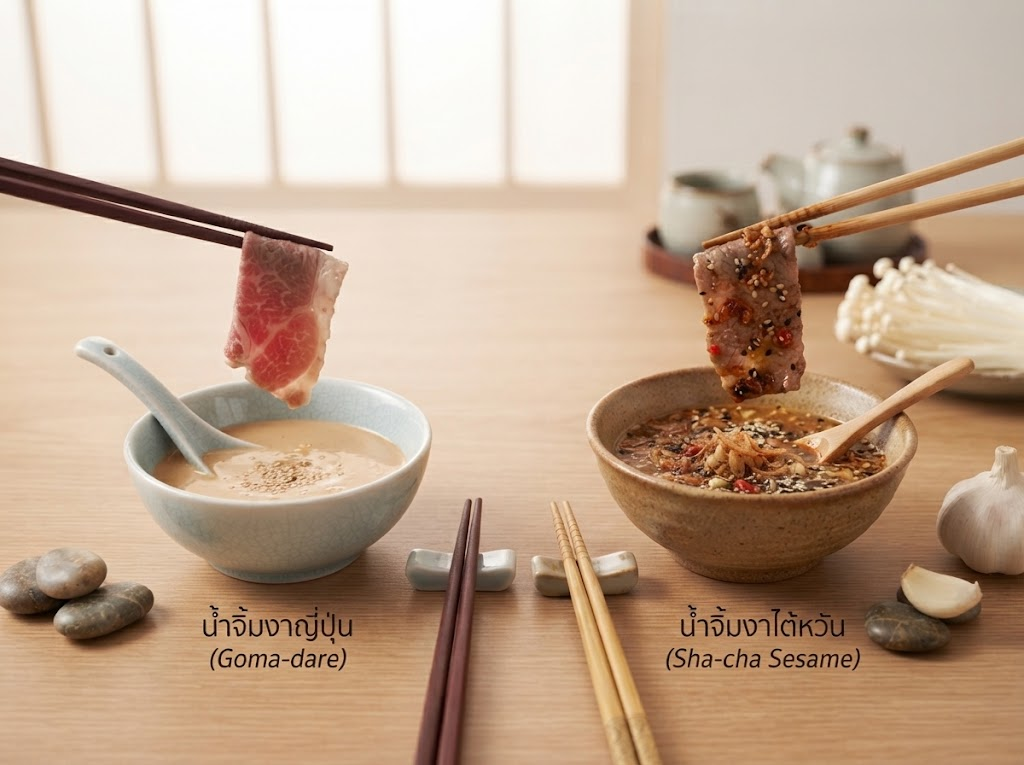
What Is Japanese Sesame Dipping Sauce (Goma Dare) Made Of and How Does It Taste?
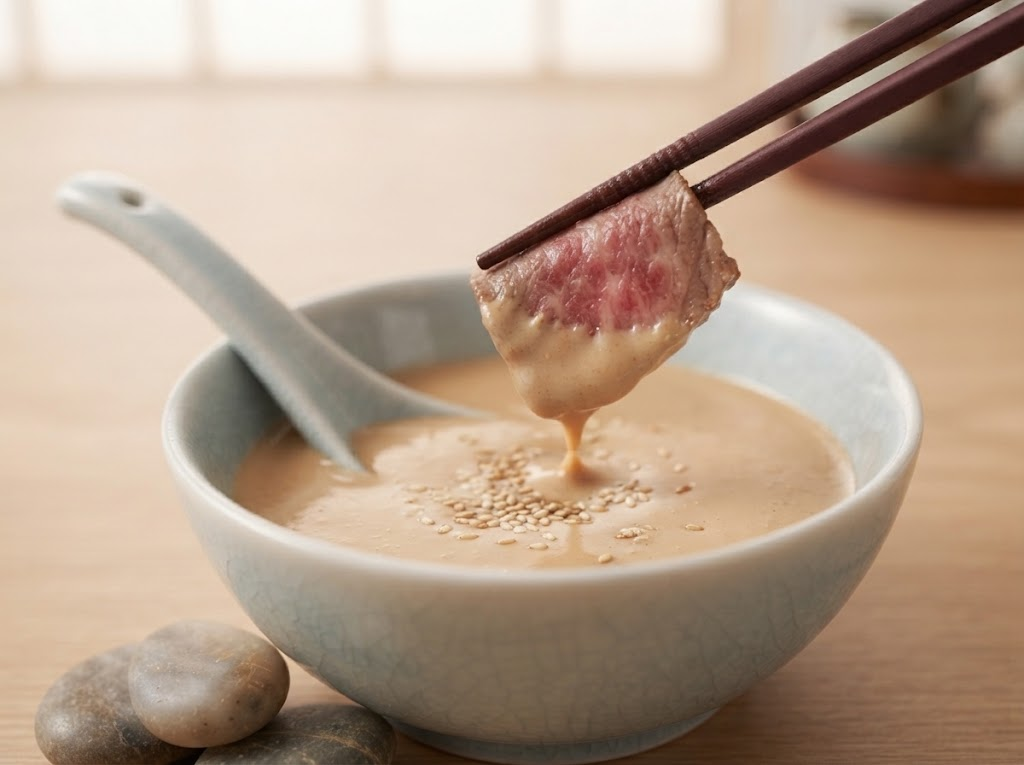
Japanese sesame dipping sauce, or goma dare, is made from roasted white sesame ground until smooth, mixed with shoyu, mirin, and fermented rice vinegar. Some recipes add mayonnaise for a thicker, creamier texture. The result is a pale, smooth sauce with a rich, nutty, salty-sweet flavor and a light tanginess that helps cut through richness.
The aroma comes from roasting the sesame just right; if roasted too long, the sauce turns bitter. Japanese sesame dipping sauce goes well with thinly sliced beef and pork cooked in kombu broth or clear soup, because its flavor is not so strong that it overpowers the meat and vegetables.
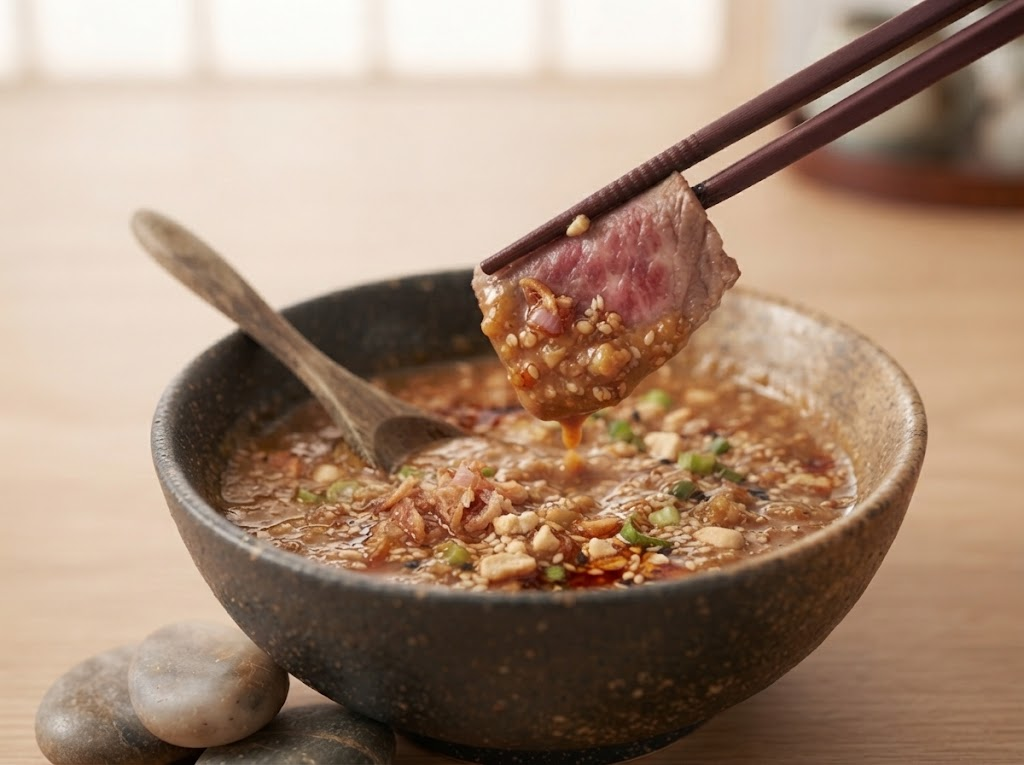
What Is Taiwanese Sesame Dipping Sauce Made Of, and How Is It Different From the Japanese Style?
Taiwanese sesame dipping sauce also uses ground sesame as its base, but it is mixed with bolder seasonings such as soy sauce, black vinegar, ground fermented soybean paste or sha cha sauce (a Chinese-style satay sauce), and many recipes add ground peanuts. The sauce is therefore thicker and more viscous, with a slightly gritty texture from the sesame and peanuts, and a salty, rich, spicy flavor with a hint of sweetness at the end.
At Taiwanese-style hot pot restaurants, diners often customize a basic sesame sauce themselves with minced garlic, green onion, fresh chili, and chili oil, so the spice level varies with what each person adds. This style goes well with mala soup or rich pork bone broth.
How Do the Ingredients, Texture, and Flavor Compare?
| Topic | Japanese sesame dipping sauce | Taiwanese sesame dipping sauce |
|---|---|---|
| Main ingredients | Ground roasted white sesame, shoyu, mirin, vinegar (some recipes include mayonnaise) | Ground sesame, soy sauce, black vinegar, fermented soybean paste or sha cha sauce (some recipes include ground peanuts) |
| Texture | Smooth and creamy, clings easily to food | Thick and viscous, slightly gritty from sesame and peanuts |
| Main flavor | Rich and nutty, salty-sweet, slightly tangy | Bold, salty and rich, nutty |
| Spiciness | Not spicy | Mild to medium, depending on the chili oil added |
| Broths it pairs with | Kombu broth, clear soup, black shabu | Mala soup, pork bone broth, tom yum soup |
| Popular add-ins | Ponzu, sliced green onion | Minced garlic, fresh chili, chili oil |
To see where sesame dipping sauce fits compared with other shabu dipping sauces, such as suki sauce and ponzu, readHow many types of shabu dipping sauce are there
Which Sesame Dipping Sauce Should You Choose for Which Ingredients?
- Marbled sliced beef: Japanese style; its mild flavor doesn't overpower the beef
- Sliced pork belly: Taiwanese style, or Japanese style with a little ponzu added for tanginess to cut the richness
- Boiled vegetables and mushrooms: Japanese style; its creamy texture clings well to vegetables
- Shrimp and squid: Taiwanese style; the spiciness and spice aroma help mask any fishy smell
Can You Adjust a Ready-Made Sesame Dipping Sauce to Taste Closer to Each Style?
Yes, with seasonings from your kitchen. For a more Japanese-style flavor, add about 1 teaspoon of ponzu for extra tanginess, sprinkle on sliced green onion, or add 2–3 drops of sesame oil. For a Taiwanese-style flavor, add minced garlic and fresh chili and sprinkle on ground roasted peanuts, or mix in a little mashed fermented tofu. All sesame dipping sauces contain sesame, so people with sesame allergies should not eat them, and people with peanut or nut allergies should be careful with any added seasonings.
What Is Often Misunderstood About These Two Sesame Dipping Sauces?
- Many people think all sesame dipping sauces are the same and differ only in thickness. In fact, the seasonings mixed with the sesame are different, so the flavors and the broths they pair with are different too.
- Not every Japanese sesame dipping sauce recipe includes mayonnaise. The basic recipe uses ground sesame, shoyu, and mirin.
- The Japanese style is mild, so it may feel heavy when eaten with very fatty foods, while the bold Taiwanese style may overpower delicately flavored meat. Keeping both at home lets you choose based on the broth.
Which Sesame Dipping Sauces Does Pure Foods Offer?
If you like the rich, nutty Japanese style, seeJapanese-Style Roasted Sesame Dipping Sauce, 850 g If you like a nutty flavor, trySesame Peanut Dipping Sauce, 150 g And if you like a numbing-spicy flavor for mala hot pot, tryRoasted Sesame Dipping Sauce, Mala Flavor, 150 g
Frequently Asked Questions
Which Sesame Dipping Sauce Is Sweeter?
The Japanese style is usually sweeter because of the mirin, while the Taiwanese style focuses on salty, rich, and spicy flavors with only a hint of sweetness at the end.
Which Style Goes Better With Moo Kratha (Thai Grill-Hot Pot)?
People who like bold flavors often choose the Taiwanese style because it is richer and spicier. If you prefer milder flavors, the Japanese style with added ponzu also helps cut through fatty pork.
Can People Who Eat Jay (Thai Vegan) or Vegetarian Food Eat Sesame Dipping Sauce?
It depends on the recipe. Some Japanese-style recipes contain egg from mayonnaise or bonito stock (dashi), while Taiwanese-style sauces made with sha cha sauce often contain dried shrimp or dried fish, and many recipes contain garlic, so they are not jay food. Read the ingredients on the label before buying.
Summary
Japanese sesame dipping sauce is smooth, sweet-tangy, and not spicy, making it a good match for clear-broth shabu. Taiwanese sesame dipping sauce is thick, salty-spicy, and nutty, making it a good match for mala hot pot and bold-flavored soups. If you need sesame dipping sauce for your home or restaurant, contact us at LINE @purefoods
📞 Phone: 081-546-6606 (24Hrs)
LINE: Line : @purefoods
E-mail: Pure Foods
