
Today we'd like to share 3 topics for anyone who wants to start a Korean fried chicken shop but doesn't know how. Let's look at what you need to do and the steps involved in opening a Korean fried chicken shop.
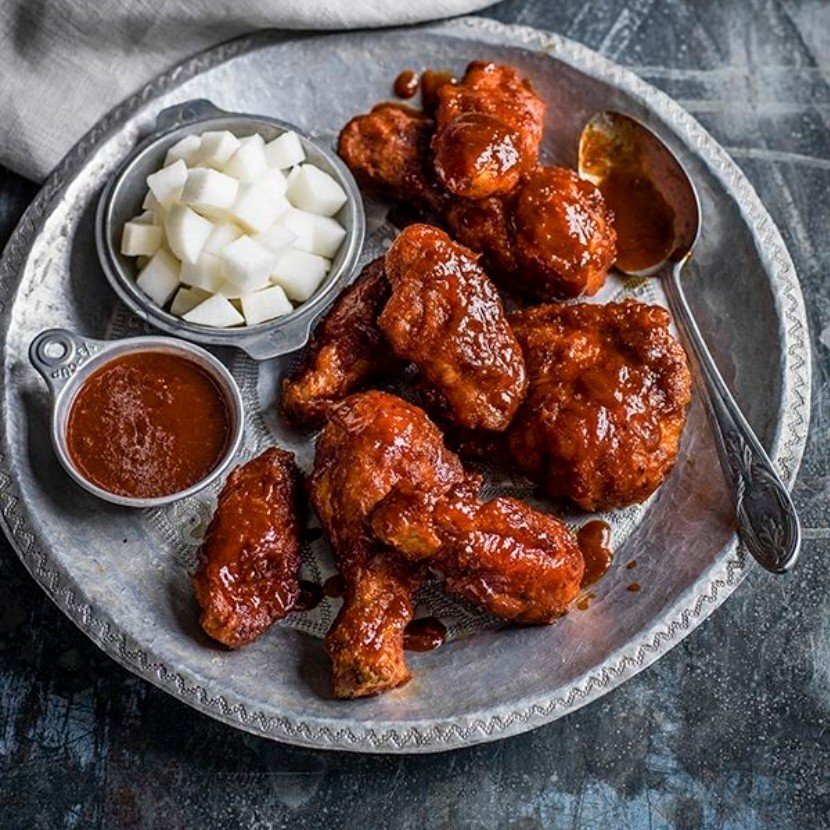
Section 1 covers the basic essentials a Korean fried chicken shop needs, whatever format the shop takes.
- Delicious, consistent food that matches its pictures: To open a Korean fried chicken shop, always keep in mind that "deliciousness is the basic thing every restaurant must have." Even if your shop is in a prime location, if the taste doesn't appeal, it will be hard to get customers to come back. Another important thing is consistent taste: no matter how many times customers come, the food must taste the same every time, which is a basic standard for restaurants. Today, Purefoods offers chicken coating sauces in various flavors that help sellers with convenience and consistent taste, and suit Thai tastes. Also don't forget the appearance of the food you serve: whatever the menu photos show, the food served must look the same or better, so customers aren't disappointed when they receive it. The shop can set an S.O.P. for cooking so each dish has a consistent taste and presentation.
- Be different from other shops and know your strengths: This is key to making customers remember your Korean fried chicken shop. For example, if your shop has a unique Korean chicken coating sauce recipe different from other shops, make it your highlight to attract customers. Shop decoration can also be a point of difference, as discussed in the next section.
- Good decoration is half the battle: Korean fried chicken shops are everywhere, but how many do we remember? What we remember comes from the atmosphere and how customers feel. Each color used in decoration gives a different feeling; green, for example, feels fresh, lively and full of life. Which colors to use in your shop depends on the feeling you want to give customers. Even if you run a stall rather than a fixed shop, this matters too. Decoration that expresses your brand image and successfully conveys a feeling to customers will make them remember your shop.
- A clear business plan: Business needs goals, so a business plan is like a guide to reaching them. First, get to know the BMC, a simple business plan that gives a clearer overview of your Korean fried chicken business: who you'll sell to, where, when and how, and where the investment comes from. Krungthai Bank also suggests that a good business plan should include a SWOT analysis: S for the shop's strengths, W for weaknesses, O for business opportunities and T for threats you'll face. In addition, have a year-round marketing plan by month, or some shops even by week, to control the marketing budget.
- The right location: This relates to points 3 and 4 above. A good location doesn't guarantee your Korean fried chicken shop will sell. For example, a premium Korean fried chicken shop with ingredients shipped directly from Korea, with prices starting at 200 baht, opening in front of a provincial school, will certainly have many people passing by, but it doesn't suit the people in that area, so in the end it won't sell and will fail. So planning what format your shop will take, who you'll sell to, at what price, and what your brand image is, is what puts your shop in the right place for the right target group.
- Quality ingredient sources: Several studies indicate that food quality leaves customers feeling good after their visit, and good food quality is a basic requirement for every restaurant. At a Korean fried chicken shop, making Korean fried chicken requires various cuts of chicken, crispy batter, oil and chicken glazing sauce. For each ingredient, the owner needs to find suppliers that suit the shop and can maintain quality and deliver consistently. And if the shop sells not only Korean fried chicken but also side dishes or other menu items, those ingredients also need to be of good quality to support the shop's main product.
- Variety gives customers choice: Variety here means the number of menu items you sell. Too few items only appeal to a few customer groups, resulting in fewer buyers. But too many items affect the shop's costs, since you must prepare ingredients for every item without knowing whether it will sell. If it doesn't sell, costs go up; and if you don't prepare ingredients for every item and a customer orders something that's sold out, it reflects badly on the shop.
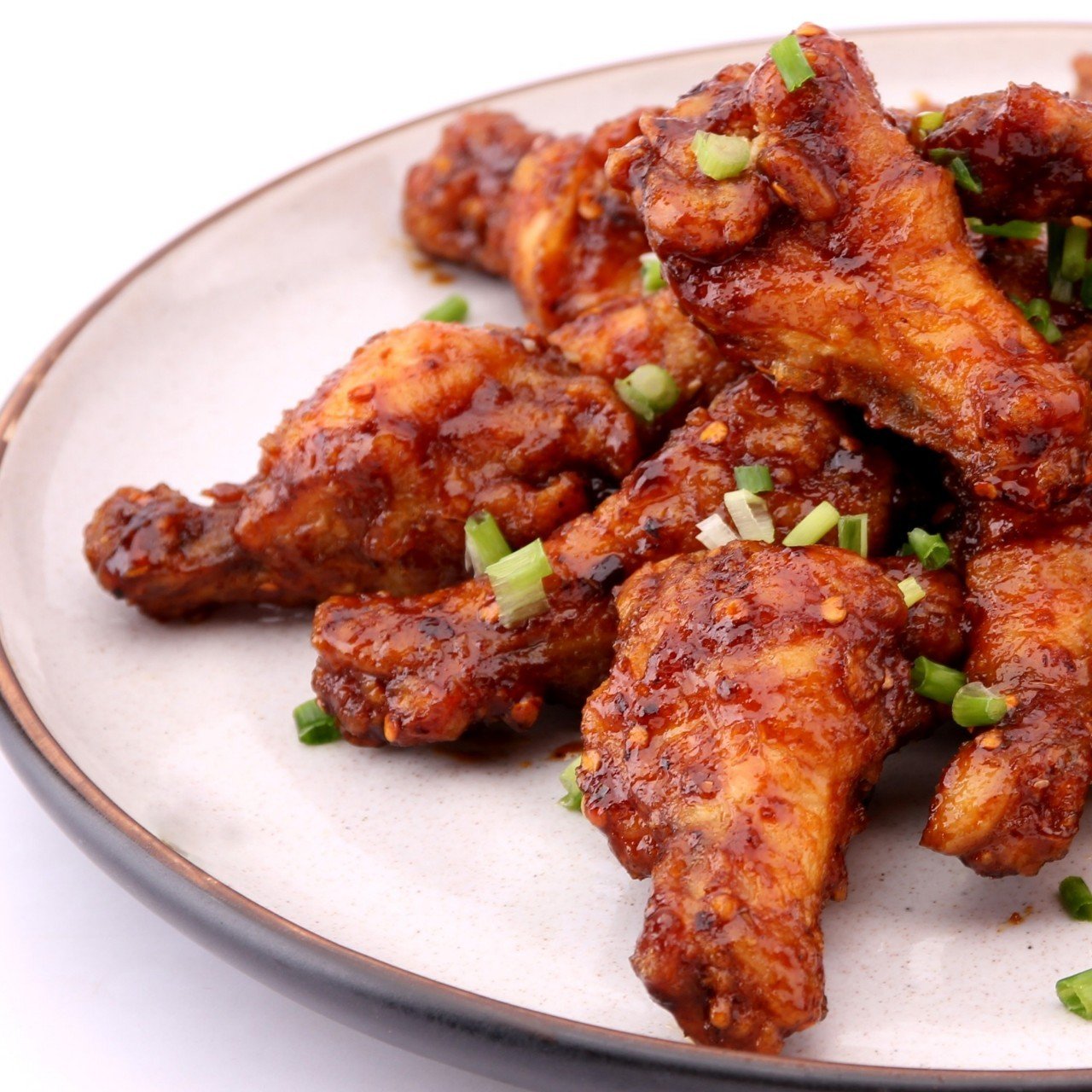
So there needs to be a balance, not too much and not too little. This should be based on observing the behavior of the shop's target customers, with a survey done before actually opening, which makes business planning easier. For example, Bonchon has Korean fried chicken as its main seller, but it also offers other dishes such as kimchi soup, salads, snacks and much more, giving customers choices, increasing sales opportunities and also expanding the customer base. If you want to focus on offering a variety of Korean fried chicken, you might use a ready-made chicken glazing sauce, which helps save preparation time, keeps costs consistent and provides a range of flavors, giving customers more options.
Purefoods offers chicken coating sauces in 5 flavors:
- Korean Chili Recipe – Sweet up front, followed by heat, with the aroma of Korean chili and gochujang
- Hot & Spicy Recipe – Medium heat, followed by sweetness, slightly salty and well-matched
- Double Spicy – very spicy, for those who love heat, followed by sweetness and a little saltiness
- Barbecue Recipe – Sweet, with a smoky barbecue-style aroma
- Garlic Recipe – Sweet and salty, well-balanced, with garlic aroma
One 1,000 g bag can coat up to 6 kg of crispy fried chicken, and can also be used to make Korean-style instant noodles. It reduces ingredient preparation time, gives a consistent standard recipe and comes in many flavors to choose from.
Topic 2: Managing people is another difficult thing business owners must face
Besides having a Korean fried chicken shop that meets the needs of its target customers, another key element of any restaurant is its staff. Many people, as customers, have experienced poor service: staff who speak rudely, frown, or are untidily dressed. As customers, they don't want to return to that restaurant, which hurts a Korean fried chicken shop and, in the long run, makes it harder for the shop to grow. That is why managing people is important.
Managing people to get the results you want requires rules and work plans to bring out the full skills and abilities of your staff.
Fair Rules Good rules should let staff work together happily and reduce conflict, and may be in line with labor laws, such as:
- . General work: working hours must not exceed 8 hours per day or 48 hours per week, depending on what is agreed.
- Employees may work no more than 5 consecutive hours and must have a break of at least 1 hour. Breaks can be split into periods, but must total at least 1 hour.
- Annual leave: after working for more than 1 year, employees are entitled to 6 or more days, which can be carried over to the following year. Sick leave: taken as actually needed, with pay for up to 30 days. Personal leave: 3 or more days may be taken, but pay is limited to 3 days, and so on.
There are also rules that employees should know and employers must explain, such as the benefits employees receive, leave rights and details, penalties for misconduct such as deductions, and the advance notice employees must give when resigning. Likewise, if there is a dismissal, the employer must also give advance notice.

Nature and Scope of Work for Each Position Staff in each position need different key skills. For example, cashiers must be careful and thorough, while servers must have a service mindset and be cheerful. Each position should have basic details from recruitment onwards, along with the scope, duties and work of each position, to avoid confusion among staff and reduce conflict within the shop.
S.O.P. as a Work Guideline For staff to work to standard, you need an S.O.P. that sets out how work is done, where to start and where to finish. The S.O.P. should cover both back-of-house and front-of-house work and how to handle various problems, so the shop runs as a good system.
A Good Work Environment Makes People Want to Come to Work No one wants a toxic work environment, and something shop owners can do at no cost is give sincere praise and encouragement on difficult days. In addition, in everyday conversation at work, use pleasant words that don't pressure, mock, belittle or make staff feel bad. If a staff member does something wrong and needs to be warned, speak reasonably and calmly, and listen to their views too.
Listening to staff opinions and using them to make improvements makes staff feel involved in running the shop and that they have an important role, which builds loyalty to the shop so staff can give their best. Also don't forget fairness in caring for staff: don't show favoritism that makes others feel bad, or criticize some staff in front of others. If there's a problem, it's better to talk in private.
Clear Salary Scales If staff talk about salaries and find out how much each person earns, it can cause resentment. For example, if a new employee in the same position earns more than an existing one, the existing employee may become less productive. So clearly state the starting and maximum salary for each position and the conditions for each salary range. Salary increases based on performance or promotions must always have a reason.

Topic 3: Plan Your Finances Carefully
A business can keep going if it makes a profit, but you need to know how to keep costs under control and not let them spiral, because if you don't fix or adjust things in time, you may have to close the shop with debts to repay.
- How to Sell and Still Make a Full Profit
Have you ever wondered how to set a selling price that makes a profit and is still reasonable? There are many ways to set prices, but in the restaurant business, prices are usually set according to the target group. Selling to students has its own suitable price range, while selling to middle-aged city workers allows higher prices, depending on the shop's location, customers and competitors. The type of Korean fried chicken shop also affects the price. For a sit-down shop with air conditioning and good decoration, food cost should not exceed 15–25 percent of the selling price; for street food, food cost should be around 35–50 percent of the selling price. Setting percentages like this gives business owners a clearer overall picture and helps allocate ingredients appropriately. Purefoods offers ready-made chicken coating sauces in various flavors that make cost calculation and ingredient preparation more convenient, with a taste that suits Thai preferences.
Promotions also help increase sales and profit, such as Korean fried chicken and drink sets sold together at a lower price than separately, so customers feel it's good value because they get both, which increases the chance of purchase. Promotions can also follow current trends and popularity, as long as they suit your target group, to help increase sales. - Keep costs from spiraling: Everything in the shop is a cost, even time. Keeping daily accounts lets you see problems with ingredient management, such as overstocking or too much waste. So forecast from daily sales to limit stock. Utilities are also costs; saving, such as setting the hours the air conditioning runs and turning off lights when not in use, helps keep costs more stable.
- The right number of staff: Plan staff numbers to suit the workload. For a Korean fried chicken shop that can serve 30 tables, plan how many staff each position needs. Some positions can be combined, such as host and order-taker, as suits each shop. Too many staff increases costs unnecessarily.
- Understand cash flow: Cash flow is the money left after deducting daily or weekly expenses. In an emergency, such as a broken refrigerator or stove or running out of ingredients, if the shop has no reserve money, it directly affects the business and may force a temporary stop while expenses stay the same or increase. So allocate your budget appropriately for water, electricity, staff and rent, which are fixed costs you must set aside every month, and don't forget an emergency reserve.
Summary
Opening a Korean fried chicken shop requires being prepared in many areas, especially the 7 basic essentials covered in the first section: 1. Tasty, consistent food that matches what is advertised 2. Being different from other shops 3. Good decor is half the battle 4. A clear business plan 5. A suitable location 6. Quality ingredient sources 7. Variety that gives customers choices. These 7 points are things every restaurant should have and maintain, but there are other factors to consider as well, such as financial planning, business planning, the shop's various systems, basic labor law, and financial knowledge that helps a food business run more smoothly. If you understand all of this well, you will be well prepared to open your own Korean fried chicken shop.
Or if you would like to try selling Korean fried chicken but don't have a recipe yet, we suggest Pure Foods ready-made chicken glazing sauce, made to suit Thai tastes, produced to standard and reasonably priced. One 1,000-gram bag can coat 6 kilograms of fried chicken, and there are 5 flavors to choose from: Korean Chili – sweet up front, followed by heat, with the aroma of Korean chili and gochujang. Hot and Spicy – medium heat, followed by sweetness and a hint of saltiness, all well balanced. Double Spicy – very spicy, for those who love heat, followed by sweetness and a little saltiness. Barbecue – sweet, with a smoky barbecue aroma. And finally Garlic – sweet and salty, well rounded, with a garlic aroma, a flavor suited to people of all ages.
📞 Phone: 081-546-6606 (24Hrs)
LINE: Line : @purefoods
E-mail: Pure Foods
