
The main ingredients of Japanese sukiyaki-style black soup are shoyu (Japanese soy sauce), mirin, and sugar, which give it a dark color and a sweet-salty taste. Many recipes add sake and dashi or kombu to enhance the aroma and umami, then dilute with water or stock to a suitable strength for cooking ingredients.
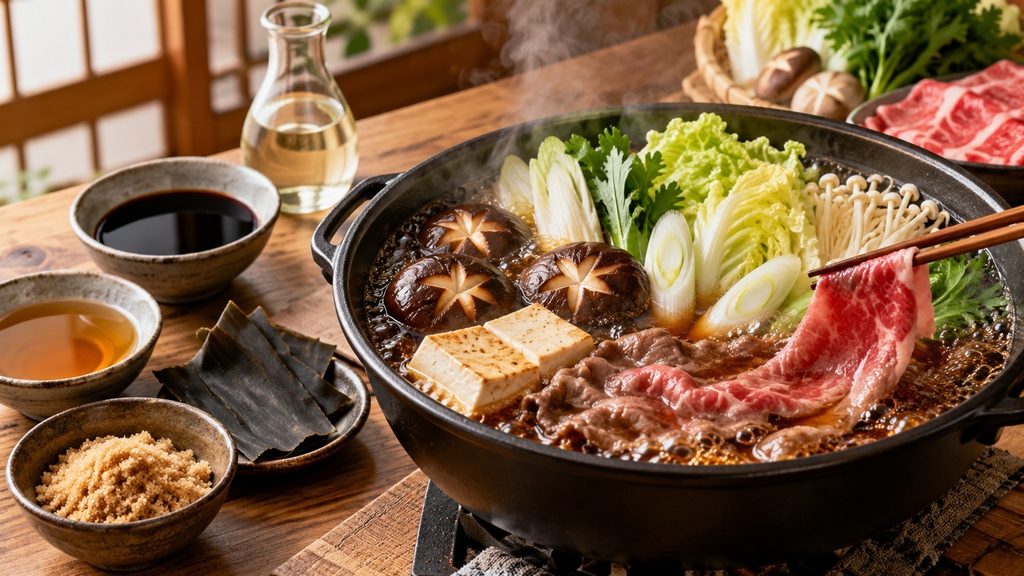
How Is Black Soup Related to Sukiyaki Sauce?
The black soup at Thai shabu restaurants takes its flavor direction from “warishita,” the seasoning sauce for Japanese sukiyaki, but it is diluted to make enough to cook ingredients throughout the meal. Read the full background inthe origins of black soup
What Does Each Ingredient in Black Soup Do?
1. Shoyu provides saltiness and dark color
Shoyu is the main ingredient that gives the broth its saltiness, aroma, and color. How dark the color is depends on the type and amount of shoyu, but a dark color doesn't mean the broth has to be very salty, because the sweetness from mirin and sugar helps balance the taste.
2. Mirin provides mild sweetness and a Japanese aroma
Mirin is a Japanese seasoning that gives sweetness and a distinctive aroma, and it is often paired with shoyu in sukiyaki sauce. Each type of mirin has a different level of sweetness, and “mirin-flavored” products may be sweeter or smell different from what the recipe intends, so taste before adding more sugar.
3. Sugar balances sweet and salty
Sugar cuts the saltiness of the shoyu and rounds out the flavor. The amount should be considered together with the sweetness of the mirin. If the recipe already uses sweet mirin, reduce the sugar and add it a little at a time, because as the broth simmers and water evaporates, the sweetness becomes stronger.
4. Cooking sake enhances aroma and depth of flavor
Sake appears in many warishita recipes and helps enhance aroma and roundness, but it isn't necessary in every black soup recipe. Some sake and mirin contain alcohol; if you want to avoid it, choose a recipe without sake and check the ingredients of the mirin you use.
5. Dashi or kombu adds umami
Dashi is Japanese stock, which can be made from kombu, dried bonito, or mushrooms depending on the recipe. Kombu is soaked or gently simmered to give a milder umami. If you don't want fish ingredients, use kombu or mushroom dashi instead of dried bonito.
6. Water or stock sets the strength
Water or stock is used to dilute the seasoning base to suit shabu cooking. If you use a concentrated sauce without diluting it, the taste will be too strong, and as meat, vegetables, and mushrooms go into the pot, the flavor of the broth will also change during the meal.
Which Ingredients Are Essential and Which Are Optional?
Black soup can't do without shoyu, mirin (or sugar), and water, while sake, dashi, and kombu are optional additions that each recipe includes differently.
| Ingredients | Role | Essential or optional |
|---|---|---|
| Shoyu | Saltiness, aroma, and dark color | Essential |
| Mirin | Mild sweetness and a Japanese aroma | Essential (sugar can partly substitute) |
| Sugar | Balances sweet and salty | Essential (adjust to the mirin's sweetness) |
| Sake | Enhances aroma and depth of flavor | Optional |
| Dashi / kombu / mushrooms | Adds umami | Optional |
| Water / stock | Dilutes to a suitable strength for cooking | Essential |
How Do You Balance the Flavor of Black Soup?
Balance the flavor of black soup by adding shoyu, mirin, and sugar to water or stock a little at a time, and taste while the broth is hot, because it tastes different hot than cold. If using sake, add it as the recipe specifies.
- Too salty: Add water or unseasoned stock. See step-by-step fixes inBlack shabu broth too salty: how to fix it
- Too sweet: Add shoyu a little at a time, or add water and taste again.
- Stronger after long simmering: Lower the heat so it doesn't boil vigorously, and add water when the broth reduces.
Can You Use Concentrated Black Soup Instead of Mixing Your Own?
Yes. If you don't want to measure shoyu, mirin, and sugar yourself every time, use a concentrated black soup and mix with water according to the label. Black Shabu Soup, Concentrated Shabu Soup, Traditional Recipe, 900 g from Pure Foods, the label specifies mixing 100 g of sauce with 1,500 ml of water. The 900 g size makes about 9 pots (around 6–10 pots, depending on your preferred strength).
Another recipe isJapanese-Style Concentrated Black Shabu Sukiyaki Sauce, Recipe 2, 200 g Ingredients and allergen information for each recipe can be found on the product label, or see all products inBlack Shabu Category
What Ingredients Go Well with Black Soup?
The sweet-salty taste of black soup goes well with sliced beef, sliced pork, shiitake mushrooms, enoki mushrooms, tofu, napa cabbage, and Japanese green onions. Meat adds depth of flavor, while vegetables and mushrooms add aroma. Add ingredients in rounds, top up the broth when it gets low, and cook meat through before eating.
Frequently Asked Questions
Can Black Soup Be Made with Soy Sauce Alone?
Soy sauce can be used as the base, but for a Japanese sukiyaki-style taste, you need to add sweetness from mirin or sugar and dilute with water or stock.
Does Black Soup Need Dried Bonito?
Not necessary. Some recipes use kombu dashi, or plain water without dried bonito, depending on the desired flavor.
Can Mirin and Sugar Be Substituted for Each Other?
Both provide sweetness, but their aromas differ. If you use only sugar, the broth will be sweet but lack the Japanese aroma of mirin.
Why Is the Black Soup at Some Restaurants Sweeter Than Others?
Each restaurant uses different proportions of shoyu, mirin, sugar, and water. Simmering time and the ingredients in the pot also change the flavor during the meal.
Do Ready-Made Black Soups All Have the Same Ingredients?
No. Each recipe differs in its sources of sweetness and umami, as well as allergens. Check the ingredients on the label of the product you use.
Summary
Black soup is built on shoyu, mirin, sugar, and water, while sake, dashi, and kombu add aroma and umami. For concentrated black soup for home or shabu restaurants, contact LINE @purefoods
📞 Phone: 081-546-6606 (24Hrs)
LINE: Line : @purefoods
E-mail: Pure Foods
